If you are heading to MAD//North this year, make space in your calendar, because one of the most unmissable sessions is not about spending big, but thinking boldly. Ponderosa founder Richard Midgley will be lifting the lid on something every brand should want but few truly master: outthinking instead of outspending.
And frankly, the timing could not be better. In today’s hypercompetitive landscape, growth is no longer a simple function of spend. When categories get crowded, too many brands try to outshout their way to success. But what happens when you simply cannot outspend the market leader? When your budget will not buy you the share of voice you need?
This talk argues there is a better way. That is exactly what Midge will be sharing in his unmissable session. He will show how brands add distinctiveness and gain commercial edge by outsmarting their competitors over outspending them. Expect real examples, practical frameworks, and the kind of provocative simplicity Midge is known for.
This is a session on disruptive thinking, but it is not just for challenger brands. It is for any brand or agency navigating currently rocky cultural, consumer, or competitive headwinds. If you need ideas that punch above their weight, this is your roadmap to breaking free from convention and unlocking the power of divergent thinking.

The Five Principles of Outthinking over Overspending
Here is a teaser of the thinking Midge will be unpacking – five practical principles to help any brand develop its divergent thinking.
1. Diagnose the need for disruption
Before you jump to ideas, diagnose the real tension. What is broken in this category? What is frustrating consumers? What makes it ripe for disruption?
Take boutique sofa brand Schplendid.
Founder Rohan Blacker spotted a glaring contradiction: sofas had become disposable fashion items yet were still made from materials that last centuries in landfill. So instead of splurging on swanky showrooms and glossy ad campaigns, he doubled down on crafting longer lasting sofas that do not cost the earth. It is a reminder that true disruption often starts with an uncomfortable truth.
2. Know who you want to disrupt
Adam Morgan, the godfather of challenger thinking, puts it perfectly: “Know your enemy.” If you don’t have the biggest spend, must be ruthlessly focused about who you are taking on.
Our work with Hisense shows this in action. Instead of wading into a fight with every competitor in the TV category, we reframed the battlefield. We identified a space where the brand could win decisively.
Challenger brands do not have the luxury of fighting everyone so choose your enemies carefully.
3. Be clear on what makes you different
As our Strategy Director, Adam Irwin, always asks: “Does your positioning give you room to be disruptive?”
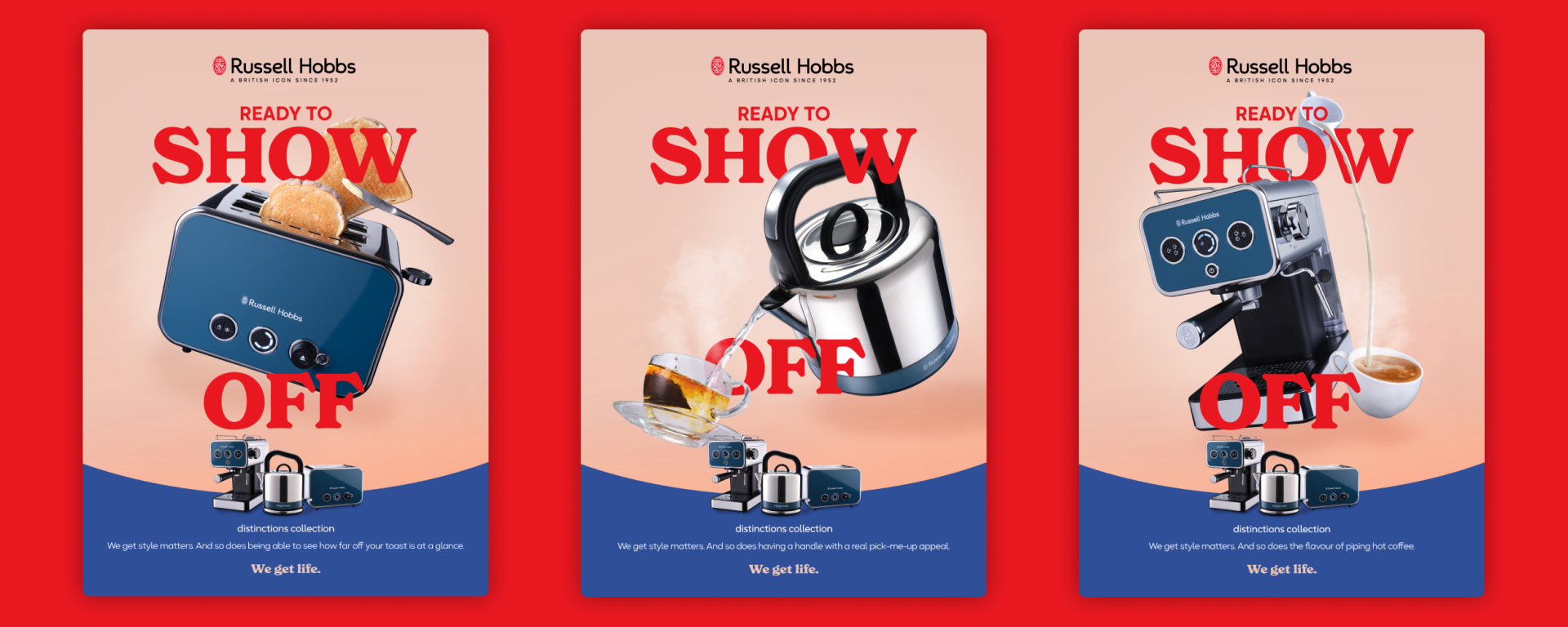
In his work repositioning Russell Hobbs, he helped the brand pivot around “We Get Life”. Rooted in 70 years of being at the heart of British homes, they understood how we really live and what matters better than the competition. This allowed the brand to break free from category norms of sterile kitchens and product demos. Suddenly marketing could feel real, human and beautifully imperfect.
This disruptive positioning did not just inspire communications. It reshaped the product portfolio around genuinely thoughtful ideas. When you know what makes you different, you unlock permission disrupt everything.
4. Unearth existing points of difference
Disruption does not always mean inventing something new. Sometimes the most powerful advantage is already hiding inside your brand. Our ALTthink approach begins by identifying the underleveraged strengths brands often overlook – from niche channels to superfans to tiny service moments.
In our pioneering work for Nomad Foods, we used hedonic regression to decode every element of a fish finger – from crumb count to cod content – to understand what customers truly valued. This told them what to shout about and what they could save on. Applying this type of research to FMCG was a first that made us an MRS Award Finalist.
5. Disrupt across the full marketing mix
If you cannot afford to outspend, you must outthink everywhere. Advertising is only a tiny part; the other 92% of marketing effectiveness comes from the rest of your mix.
Our Brand Divergence Index work shows this clearly, particularly in financial services. Look at Starling Bank, achieving standout Attraction with a sliver of the media budget of its competitors. Their unexpected partnerships, from National Trust’s Summer of Play to championing women entrepreneurs, allow them to tap into an overlooked female audience.
See more on how they are shifting gender representation and enhancing equity across their marketing mix: https://www.starlingbank.com/news/changing-the-way-women-are-pictured-with-money/
Your Next Best Move: MAD//North
So, if you are heading to MAD//North, this is a session worth making time for. Whether you are navigating shrinking budgets, crowded categories or shifting consumer behaviour, Intelligent Disruption offers a practical way to rethink how your brand competes.
Join Midge at 11:10am on Thursday 26th February on the Content, Culture and Creativity Stage for a look at how divergent thinking can give any brand an edge. See how smarter, simpler thinking can drive real commercial impact.